

Description
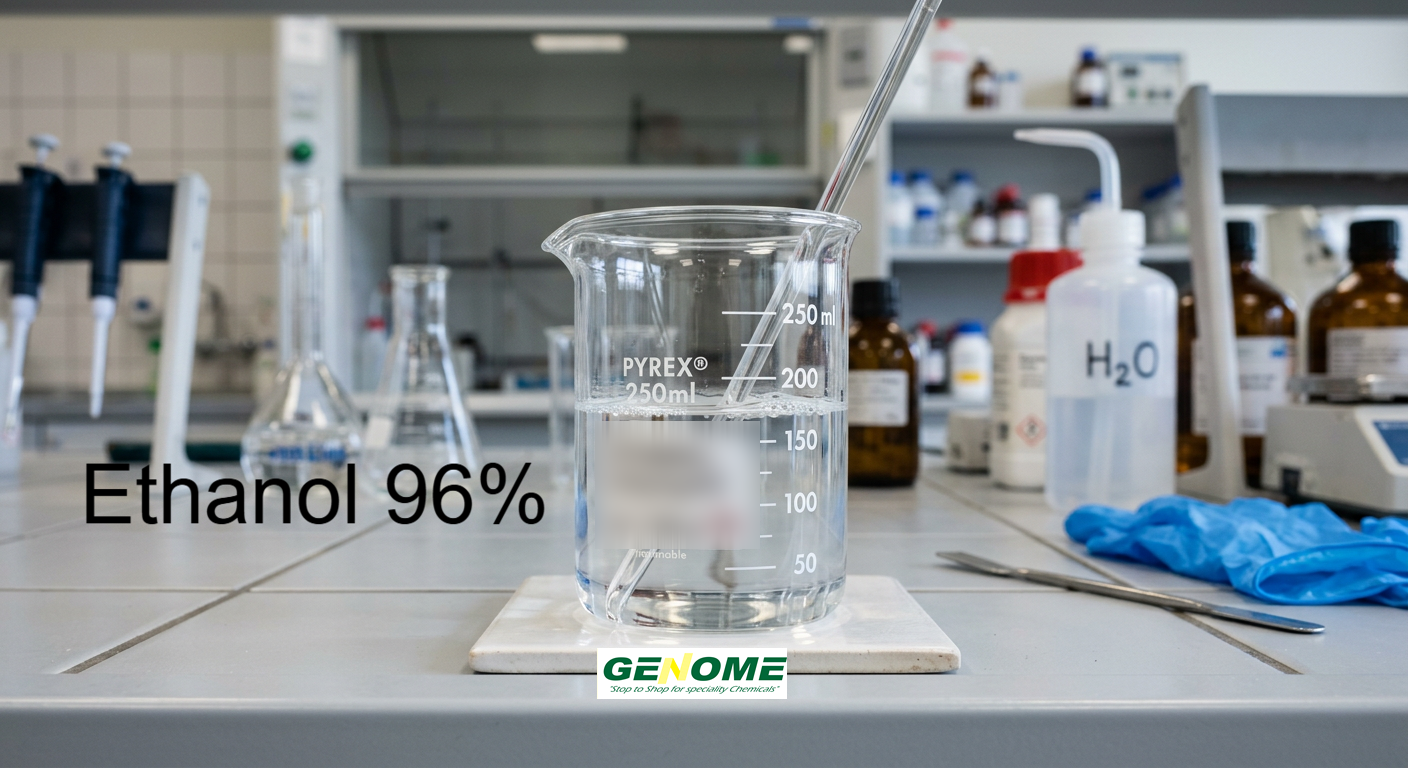
Ethanol 96%, also known as ethyl alcohol (C2H5OH), is a high-purity alcohol with a minimum of 96% alcoholic strength. The remaining percentage is primarily water, with trace amounts of other compounds like esters, methanol, and aldehydes, which are often byproducts of the production process. The most common method for producing this concentration is through the distillation of fermented feedstocks like sugarcane molasses, grains, or sugar beets.
Chemical Properties
| Property | Specification / Value |
| Chemical Name | Ethanol |
| Common Name | Ethyl Alcohol / Rectified Spirit |
| Chemical Formula | C₂H₅OH |
| Molecular Weight | 46.07 g/mol |
| Purity | ~96% Ethanol, ~4% Water |
| Appearance | Clear, colorless liquid |
| Odor | Characteristic alcoholic odor |
| Density @ 20°C | ~0.806 g/cm³ |
| Boiling Point | ~78.5 °C (azeotropic mixture) |
| Melting / Freezing Point | ~−114 °C |
| pH | Neutral (≈7, aqueous solution) |
| Solubility | Completely miscible with water; soluble in most organic solvents |
| Vapor Pressure @ 20°C | ~5.6 kPa |
| Flash Point | ~17 °C (highly flammable) |
| Auto-Ignition Temperature | ~365 °C |
| Reactivity | Stable under normal conditions; reacts with strong oxidizing agents |
| Hygroscopic Nature | Hygroscopic (absorbs moisture from air) |
Uses of Ethanol 96%
Due to its high purity and versatility, ethanol 96% has a broad range of applications across various industries.
Pharmaceutical and Medical: It is a key ingredient in disinfectants and antiseptics due to its effective antimicrobial properties. It is also used as a solvent in drug formulations, medicinal tinctures, and for sterilizing medical equipment and surfaces in hospitals and laboratories.
Cosmetics and Personal Care: Ethanol 96% serves as a base and solvent in the production of perfumes, aftershaves, deodorants, and other personal care products, helping to dissolve ingredients and providing a quick-drying finish.
Industrial and Laboratory: Its solvent properties make it an excellent cleaning agent for machinery, electronics, and lab equipment. It’s also used as a reagent in chemical manufacturing and research, including processes like DNA extraction and organic synthesis.
Food Industry: Under regulated conditions, it’s used for food-grade extraction (e.g., herbal extracts and flavors) and as a preservative due to its antimicrobial nature.
Biofuel: It can be blended with gasoline as an oxygenate, enhancing combustion efficiency and reducing toxic emissions.
Why 96% Instead of 100%?
- Pure ethanol (100%) is hygroscopic (absorbs water from air), making it unstable.
- 96% ethanol is more stable and still highly effective as a disinfectant and solvent.
- Interestingly, for killing microbes, 70% ethanol is often more effective than 96%, because the added water helps penetrate cell walls and denature proteins more efficiently


Reviews
There are no reviews yet.