


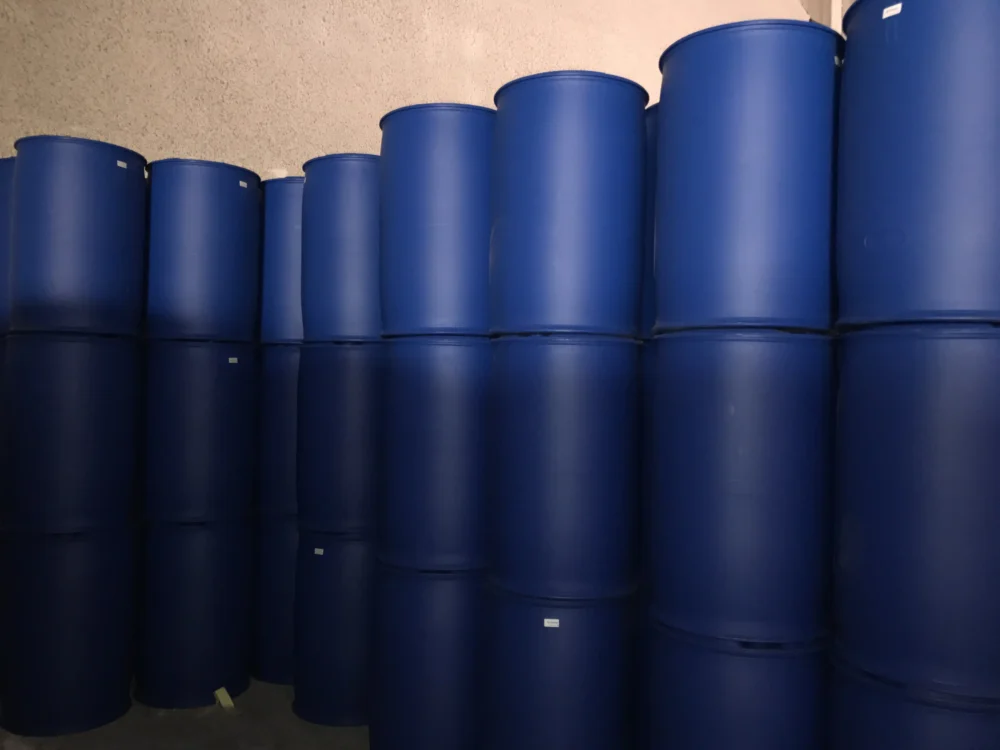
Description
Formaldehyde is an organic chemical with the formula CH2O. At room temperature, it’s a colorless gas with a pungent, strong odor. It’s the simplest of the aldehydes and is a common Volatile Organic Compound (VOC), meaning it easily off-gasses into the air from various products and materials.
Chemical & Physical Properties
Chemical Formula: CH₂O
IUPAC Name: Methanal
Molar Mass: 30.03 g/mol
Appearance: Colorless gas with a pungent odor
Density: 0.8153 g/cm³ (liquid at −20 °C)
Melting Point: −92 °C
Boiling Point: −19 °C
Solubility: Highly soluble in water (up to 400 g/L)
Vapor Pressure: >1 atm
Dipole Moment: 2.33 D
pKa (hydrate): ~13.27
Uses and Applications
Formaldehyde is one of the most widely produced chemicals in the world due to its versatility and ability to bond with other molecules to form resins.
Resins and Adhesives: Its primary use is in the production of resins, such as urea-formaldehyde and phenol-formaldehyde resins. These are used as adhesives and binders in a vast array of products, including:
Pressed-wood Products: Plywood, particleboard, and medium-density fiberboard (MDF) for furniture, cabinets, and construction.
Insulation: Used in some foam insulation.
Preservative: Formaldehyde, in its aqueous solution form known as formalin, is used as a preservative and disinfectant.
Medical and Laboratory Use: It’s used to preserve tissue samples and organs in labs and medical facilities.
Mortuaries: Used for embalming.
Vaccines: Small, safe amounts are used to inactivate viruses and detoxify bacterial toxins in some vaccines (e.g., polio and influenza vaccines).
Consumer Products: It’s found in small amounts in household products, including glues, some paints, fabrics (like permanent-press fabrics), and some cosmetics.
Other Industries: It’s a key chemical in the automotive industry for producing certain plastics and resins, and in the agricultural industry for protecting livestock from disease.
Health Effects and Safety
Exposure to formaldehyde can have both short-term and long-term health effects, primarily through inhalation.
Short-Term Effects: At low concentrations in the air, formaldehyde can cause irritation of the eyes, nose, and throat. Higher concentrations can lead to coughing, wheezing, nausea, and skin irritation.
Long-Term Effects: Prolonged exposure to high levels of formaldehyde is a serious health concern.
Cancer: The International Agency for Research on Cancer (IARC) and the U.S. National Toxicology Program classify formaldehyde as a known human carcinogen. Studies have linked occupational exposure to high levels of formaldehyde to an increased risk of specific cancers, including myeloid leukemia and cancers of the nasopharynx.
Allergies: Repeated exposure can lead to sensitization, causing allergic reactions like skin rashes and asthma-like symptoms.
Due to these health risks, a major focus has been placed on reducing formaldehyde emissions from consumer products and improving ventilation in indoor spaces





Reviews
There are no reviews yet.