

Description
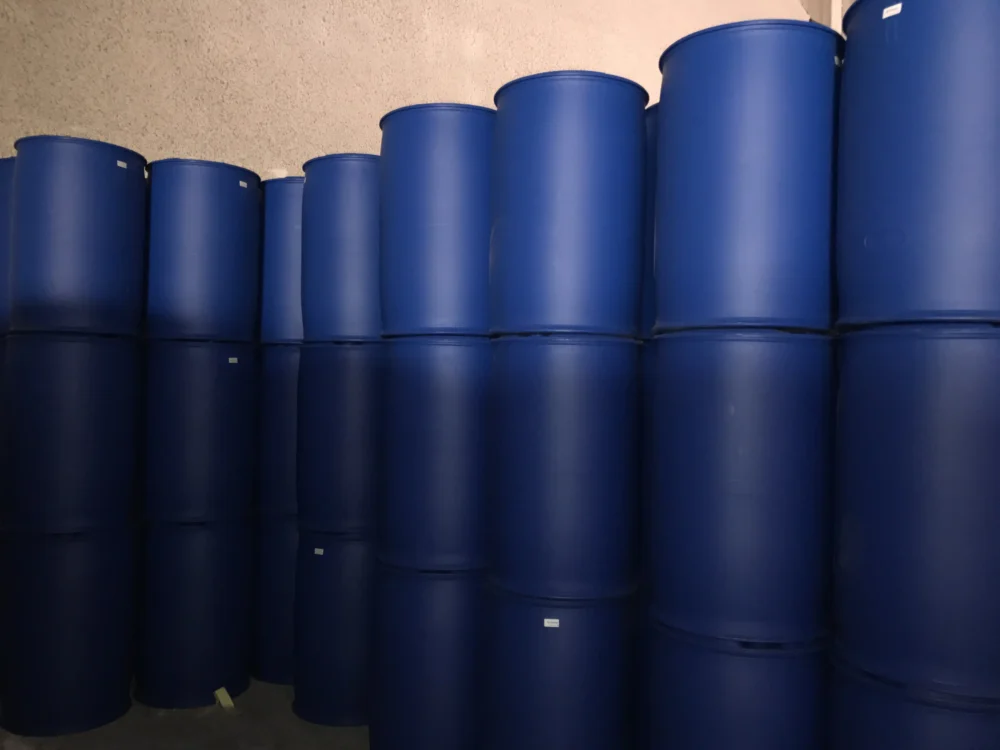
Ethyl Acetate is an organic compound with the chemical formula C4H8O2. It’s a colorless liquid that has a pleasant, fruity smell, which is why it is often associated with the scent of nail polish remover.
Properties
| Property | Description / Value |
| Chemical name | Ethyl Acetate |
| Synonyms | Ethyl ethanoate |
| Chemical formula | C₄H₈O₂ |
| Molecular weight | 88.11 g/mol |
| Chemical class | Ester |
| Appearance | Colorless, clear liquid |
| Odor | Sweet, fruity |
| pH | Neutral (aqueous solutions) |
| Solubility in water | Slightly soluble (~8–9% at 20 °C) |
| Solubility in alcohol | Miscible |
| Solubility in organic solvents | Miscible |
| Hydrolysis | Slowly hydrolyzes in acids or bases |
| Functional groups | Ester (–COO–) |
| Chemical reactivity | Generally stable |
| Oxidizing/reducing nature | Neither oxidizing nor reducing |
| Stability | Stable under normal conditions |
| Incompatibilities | Strong acids, strong bases, strong oxidizing agents |
| Polymerization | Will not occur |
Production
Ethyl acetate is primarily produced on an industrial scale by one of two methods:
Fischer Esterification: This is the classic method where ethanol (CH3CH2OH) is reacted with acetic acid (CH3COOH) in the presence of an acid catalyst, such as sulfuric acid. The reaction is reversible and produces ethyl acetate and water. CH3COOH+CH3CH2OH↔CH3COOCH2CH3+H2O
Tishchenko Reaction: This is the main commercial process used today. It involves the catalytic condensation of two molecules of acetaldehyde (CH3CHO) using an alkoxide catalyst to directly form ethyl acetate. This method is often preferred for large-scale production.
Uses and Applications
Ethyl acetate is one of the most widely used industrial solvents globally due to its low cost, low toxicity, and agreeable odor. Its main uses include:
Solvent: It is a major component in glues, nail polish removers, paints, varnishes, and lacquers. It is also used to clean circuit boards.
Decaffeination: The solvent is used to remove caffeine from coffee beans and tea leaves.
Food and Beverages: It occurs naturally in many fruits and is a common ester in wine. It is also used as an artificial flavoring agent in candies, baked goods, and other foods.
Entomology: It is used as an asphyxiant in killing jars for collecting insects, as it kills them quickly without causing physical damage.
Perfumes: In perfumes, it is used as a fast-evaporating solvent that carries the fragrance, leaving the scent behind as it dissipates.
Ethyl Acetate grades
Ethyl acetate is produced and sold in various grades, with the specific grade being determined by its purity and the intended application. The key differentiating factors between these grades are the minimum percentage of ethyl acetate and the maximum allowable levels of impurities such as water, ethanol, and acetic acid.
Industrial/Technical Grade This is the most widely produced and used grade of ethyl acetate. It is suitable for a broad range of industrial applications where high purity isn’t critical. Purity: Typically ranges from 99% to 99.5%.
Applications:
General-purpose solvent for paints, coatings, lacquers, and adhesives.
Cleaning agent in various industries.
Used in the production of glues and inks.
Urethane Grade
A specific type of industrial grade, “urethane grade” ethyl acetate is particularly important in the production of polyurethane coatings and adhesives. Its key characteristic is a very low water content to prevent unwanted side reactions with isocyanates, a key component of urethanes.Purity: High purity, often 99.5% or higher, with extremely low water content.
Applications:
Formulation of polyurethane coatings, sealants, and adhesives.
Used in products where water-sensitive materials are present.
Food/Flavor/FCC Grade
This grade is specifically for use in the food and flavor industry. It must meet stringent quality standards set by organizations like the Food Chemicals Codex (FCC) to ensure it is safe for human consumption.
Purity: High purity, generally at least 99%.
Specifications: In addition to purity, this grade has strict limits on non-volatile residue, heavy metals, and other contaminants to ensure it is food-safe.
Applications:
Used as a flavoring agent in candies, baked goods, and beverages.
Solvent for decaffeinating coffee and tea.
Pharmaceutical Grade (USP/NF/Ph. Eur.)Ethyl acetate for pharmaceutical applications must comply with the monographs of major pharmacopeias, such as the United States Pharmacopeia (USP), the National Formulary (NF), or the European Pharmacopoeia (Ph. Eur.).Purity: Very high purity, typically 99.8% or higher.
Specifications: Rigorous testing for purity, identity, acidity, and other impurities. It must be produced under strict Good Manufacturing Practices (GMP).
Applications:
Solvent for drug synthesis and purification.
Used as a process solvent or an excipient in pharmaceutical manufacturing.
Laboratory/Reagent Grades (ACS, HPLC, GC)
These grades are used for analytical and research purposes where the presence of even trace impurities could affect test results. They are not intended for general industrial use.
ACS (American Chemical Society) Grade: Meets the specifications of the ACS, a standard for high-purity chemicals used in laboratories. Purity is typically ≥99.5%.
HPLC (High-Performance Liquid Chromatography) Grade: Specifically purified for use as a solvent in HPLC. It has a high degree of purity and low UV absorbance, which is crucial for chromatographic analysis.
GC (Gas Chromatography) Grade: Purified for use in gas chromatography, with very low levels of impurities that could interfere with analysis.




Reviews
There are no reviews yet.