
Description
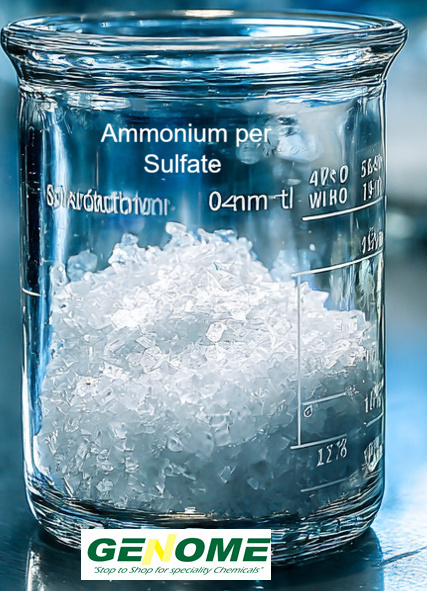
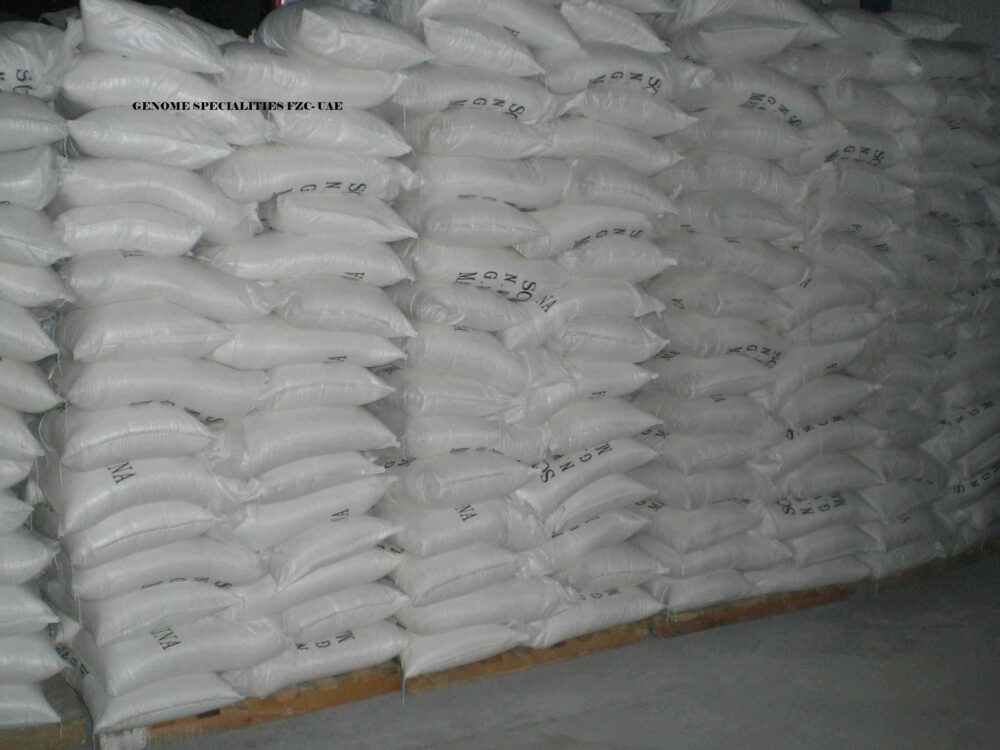
Ammonium Per Sulfate, also known as ammonium peroxydisulfate, is an inorganic chemical compound with the formula (NH4)2S2O8. It is a white, crystalline solid that is highly soluble in water and is a powerful oxidizing agent.
Chemical Properties
| Property | Details |
| Chemical Name | Ammonium Persulfate |
| Synonyms | Ammonium Peroxydisulfate |
| Chemical Formula | (NH₄)₂S₂O₈ |
| Molar Mass | 228.20 g/mol |
| Appearance | White crystalline solid |
| Odor | Odorless |
| Chemical Class | Inorganic persulfate salt |
| Oxidizing Nature | Strong oxidizing agent |
| Solubility in Water | Highly soluble |
| Solubility in Organic Solvents | Slightly soluble / Insoluble |
| pH (5% aqueous solution) | ~3.5–5.0 (acidic) |
| Decomposition Temperature | ~120 °C (decomposes) |
| Stability | Stable under normal conditions; decomposes on heating |
| Reactivity with Reducing Agents | Reacts violently |
| Reaction with Organic Materials | May cause combustion |
| Hydrolysis | Slowly hydrolyzes in water |
| Oxidation Potential | ~2.01 V (strong oxidizer) |
| Corrosiveness | Corrosive to metals |
| Hazard Class | Oxidizer |
Uses
Ammonium persulfate’s strong oxidizing and free-radical-generating properties make it useful in various industrial and commercial applications.
Polymerization: It is widely used as a radical initiator for the polymerization of various monomers to create polymers such as styrene-butadiene rubber, polytetrafluoroethylene (Teflon), and polyacrylamide.
Electronics: It serves as an etchant for copper in the manufacturing of printed circuit boards.
Hair and Cosmetics: It’s a common ingredient in hair bleaches and hair coloring formulations, acting as a “booster” to accelerate the bleaching process.
Cleaning and Bleaching: The compound is used as a cleaning and bleaching agent in various industries, including textile, paper, and food processing.
Oil and Gas: It is used as a gel breaker in the oil and gas industry.
Laboratory Applications: In biochemistry and molecular biology, it is used to prepare polyacrylamide gels for techniques like SDS-PAGE (Sodium dodecyl sulfate–polyacrylamide gel electrophoresis), which separates macromolecules based on their size.
Common Grades and Their Uses
Technical Grade: This is the most common and least pure grade. It’s used for general industrial applications where a high level of purity isn’t required. Examples include its use as a bleaching and cleaning agent, in water treatment, and as a gel breaker in the oil and gas industry.
ACS (American Chemical Society) Reagent Grade: This grade meets the strict standards set by the American Chemical Society. It has a higher purity (typically ≥98%) and is used for qualitative and quantitative analysis in laboratories, as well as for general chemical reactions. Specifications for this grade include very low levels of impurities like insoluble matter, iron, and heavy metals
Molecular Biology Grade (or Electrophoresis Grade): This is a very high-purity grade specifically for molecular biology and biochemical applications, particularly for preparing polyacrylamide gels for gel electrophoresis. It’s crucial for this grade to be free of contaminants like DNase, RNase, and protease, which could interfere with the analysis of nucleic acids or proteins. Its purity is typically ≥99%.
JIS and Other Regional Grades: Some regions have their own grading systems, such as the Japanese Industrial Standards (JIS). These grades also specify purity levels and are used for applications that need to meet those specific regional standards.



Reviews
There are no reviews yet.